557. FOR TO ME TO LIVE IS CHRIST. TO DIE IS GAIN. Philippians 1:19-26.

In this passage, we read that St Paul was facing the possibility of an imminent death. He knows that his life could soon end. 

OR he could be released from prison to minister once again to his Gentile friends. 

1:19 for I know that through your prayers and the help of the Spirit of Jesus Christ, this will turn out for my deliverance, 20 as it is my eager expectation and hope that I will not be at all ashamed, but that with full courage now as always Christ will be honoured in my body, whether by life or by death.

•          We note that the death Paul was talking about here was not the death due to the result of illness. 

•          Rather it was the possible death Paul faced because of persecution.  

•          But his words show he had the right attitude to death and the right attitude to life. 

•          What can we learn from his attitude? 

(1) THE RIGHT ATTITUDE TO LIFE (v.21) – 

•          What’s life all about? What’s the purpose of living? People have written many books on the subject. 

•          Paul gave his answer in one word, “Christ.” “For me to live is– Christ…”

•          Paul had met the Risen Christ on the road to Damascus. 

•          From that moment Christ became the very centre of his existence. 

•          What is life meant to be?  

(i) It is a relationship with a person called Jesus.

It is not just the truth about Jesus, but it is the person of Jesus Himself Who is meant to be our life. 

He is meant to be the centre of every person’s life. We are meant to enthrone Him in our hearts, so that:-

•          He becomes the focus of our thoughts.  

•          He becomes the object of our love.   

•          He becomes the subject of our conversation.   

•          He becomes our hope for the future and 

•          He becomes the meaning for our total existence. For me to live is Christ. 

Later in Phil 3:10, Paul records his whole aim in living in this life. He is saying, “This is what life is all about. That I might know Jesus and might experience the power of His resurrection.”

One of the verses that brought me from unbelief to belief was that beautiful verse in Revelation 3:20, where the picture is given by St John of the Risen Christ standing at the door of our lives knocking.   The Risen Jesus says to the individuals with that Church in Laodicea, and now to us, “Behold, I stand at the door and knock.   If any person hears my voice and opens the door, I will come in to him and sup with him,, and he with Me.” 

In many ways, perhaps through good things or perhaps through sad things that have happened, the Risen Jesus has been knocking and trying to catch our attention.   

What He wants is for us to open the door that He might come in; that He might begin to share His life with us. 

Not only that, He comes in when we open the door. He promises that He will come in, and that He will sup with us and we with Him.  

In other words we are beginning a life of never ending fellowship with Him. 

That is what life is about, to know Him, and then to be open to receive the power of His resurrection.

(ii) It is a life of serving Jesus. 

It is a life of living for Jesus in service to other people.   In verse 23 Paul is saying that he would prefer to go through death, in order to be in the presence of Jesus, than to remain alive on earth.  That was his real desire to depart and be with Christ because that would be far better. 

But as he was writing these verses, he was not thinking of himself.  He was thinking of other people as well.  He was facing the possibility of imminent death. He saw that as a going home to Jesus.   

There was that possibility, but also the possibility that he might live longer in this world.  He really wanted the former that he might go to be with Jesus, but he was willing to choose the latter that he might continue on in this world.  

Notice what he says in verse 22: that if he continued on with life in the flesh it would be fruitful labour in service for other people.  Notice in verse 24 where it says, “To remain in the flesh  (to remain in the body, to keep on living in this world) is more necessary on your account.” 

He saw the possibility of an extension of life as a means of keeping on serving other people.    “Better for that to happen than for me to go immediately to be in the presence of the Lord, because I have work to do for Him.”

In verse 25, He says, “I know, I am now convinced, that I shall remain and continue with you all, for your progress and your joy in the faith.”   

In other words, he saw the possibility of an extension of life as a means of keeping on serving other people.  

Why do we want to be healed?   Why do we want less pain and an extension of life in this world?  

Is it that we might go out and pursue our own ends and our own pleasure.   Or is it, like St Paul, to live for others in the service of Christ?  

We need to ask God to heal us for His sake that we might do His will, for the rest of our lives, rather than asking Him to heal us that we can do our thing in this world, and turn our back on God. 

So there’s something about the right attitude to life that we might enter into a right relationship with Jesus and that we might have a life in which we serve Him in serving other people.

(2)  THE RIGHT ATTITUDE TO DEATH   

The same verse, 1:21, “To me, to live, is Christ and to die is gain”.   

There is only one thing greater than knowing Jesus, and that is knowing Him more deeply, rejoicing in His presence and glory. 

That’s why St Paul saw death as being a gain, the gain of a deeper relationship with the One Who was already his life.  The gain of appropriating more and more of the unsearchable riches which are ours in Christ.

Notice the words he uses to describe death in this passage – 

(i) In verse 21 he says it is”gain”, it is benefit, it is blessing, it is an advantage for that to happen.  It means life without those restrictions that hamper our lives on earth. 

(ii)  In verse 23 he says that to die is “to depart”, and the word he uses is a very graphic word. (Some thoughts from William Barclay).

It is used to describe the unmooring of a ship.  It has been moored, and now it is unloosed, set free from bondage, that it might go on a greater journey.  

(Death is the means by which we are freed from all the limitations of this earthly existence.)

Or the word is used of breaking up camp, as people get ready to go on their way. 

(It is the means by which we begin the greatest adventure of all, entering into the fulness of life with Christ. )

Or it is used of solving a problem, and thus coming to know the answer.   

(It is the means by which all our questions will be answered in His presence. We will know as we see Him.)

It is also used by Jesus in the parable where He talks about the master returning home.   

(In entering into the presence of the Lord Himself; we are coming home to the Master, to the Saviour.) 

(iii) In verse 23, “to depart” means to be “with Christ” through death.   

What a very beautiful way to describe life after death for the Christian. “With Christ”, as St Paul says elsewhere is “to be at home with the Lord”. 

So death means that we are going to be  “with Christ”.   In 1 Thess 5:10 it says that “Jesus died for us, so that, whether we wake or whether we sleep”, ( whether we are alive when Jesus comes, or whether we have already departed), we will live with Him as Christians.

And so why – why be afraid of death? 

•          For the Christian, the best is always yet to be. 

•          In this life we can know more and more of the unsearchable riches that are ours in Christ.  

•          We can experience more and more of His resurrection power even in healing.   

•          And yes – the life that is to come after death – even that is to our advantage.   

•          Death is departure, but it is also arrival in the presence of God.

(3). LIFE OR DEATH? 

(i). It’s OK to die.  That may sound strange to say in a healing service, but “It is OK to die.”  

•          Death can be seen to be the ultimate healing in this world. 

•          All other healing is temporary, for this world only and never perfectly complete. 

•          What we as a ministry want to happen is that you live life to the full in relationship with Christ,  so that you can say from the depth of your hearts, “To me to live is Christ.” 

•          Until you can say that you’re going nowhere. You’ve missed out on what life is all about. 

•          You’re outside God’s purpose for you. 

(ii).  We don’t want you to die prematurely (from a human point of view)

•          We want you to reach your full potential in life, to do the things that God has planned from all eternity for you to do for Him.  

•          That’s why we will keep hanging in there with you when medical science says you have little or no chance of getting better. 

•          We want God to have the last say about your life, not fellow humans. 

•          We will keep praying for you until you’re sure He wants to take you home according to His timetable, not anyone else’s. 

I don’t think we can say with certainty, “to die is gain”, unless we can first say, “To me to live is Christ”. 

•          Do you want to have the same experience that Christians have enjoyed throughout the ages as they opened their hearts and lives to Him? 

•          The experience of knowing that Christ by His Spirit has come to live within them and made them new creatures in Himself. 

•          You too can ask Him to come into your life. You can ask Him to fill every part of your life with His life. 

•          You can ask Him to touch your life with His power, and to bring you the blessing and healing you need.  

•          You can ask Him to fill your heart with His love, so that you may experience His love for you and in you and through you.  

•          That’s what it means to say, “For me to live is Christ.”

Jesus stands at the door of our lives and says to us, “Behold I stand at the door and knock. If anyone hears my voice and opens the door, I will come in and sup with him and he with me.” 

•          If you are conscious that Jesus has been knocking at the door of your life, wanting to enter, then now is the time to ask Him into your life. 

•          You can do it in a prayer such as this one.

“Dear Lord Jesus. I thank You that You died on the cross to take away my sins, so that I might be forgiven. 

I thank You that You are the Risen Saviour, alive from the dead, and that You have been knocking on the door of my life wanting to come in

I now open the door of my heart and invite You to come into my life to be my Saviour from sin.  

I invite You into every area of my life, to be the Lord and Master of every part.

I offer You all I am and all I have. 

Touch my life in every area with Your healing power so that I can be healed to live for You for the rest of my life. 

I thank You for hearing my prayer and for coming into my life. 

I thank You for the healing and blessing I have in You. 

Fill me with the fullness of Your life so that I can say from the depths of my being, “For me to live is Christ. And to die is gain.”  

I ask these things in Your precious name of Jesus. AMEN

[The above sermon is based on a sermon I preached in June 2005 at a Healing service at St Andrew’s Cathedral, Sydney, when I was the Leader of the Healing Ministry there.]

Blog No.557 posted on Tuesday 01 October 2024

Posted in BIBLE PASSAGE OUTLINES, Bible verses. Comments, Faithfulness, Forgiveness, Healing, Holy Spirit, Justification, Prayer, Salvation, Sanctification, STUDIES IN PHILIPPIANS | Tagged , , , , , , , , , , , | Leave a comment

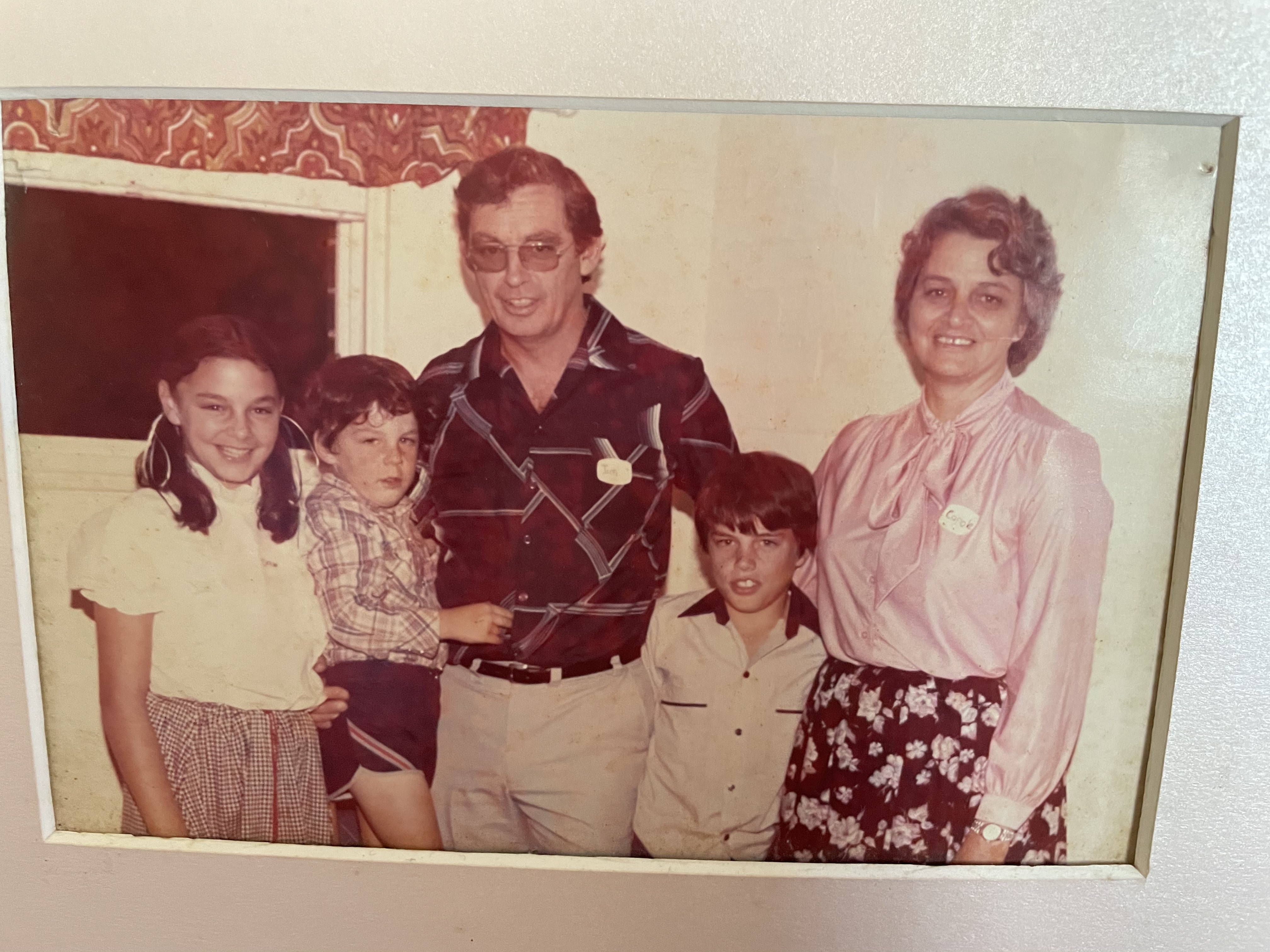
556. Carole Holbeck [nee Tapsell] Through The Ages. A Wonderful Love Story! 

It was 60 years ago on the 22nd August way back in 1964 that something happened that changed my life for ever. I had returned to Ipswich from Melbourne during university vacation and I invited my very dear friend Carole to accompany me on a trip to Monto where we stayed with my sister’s family. On the 22nd August we were travelling back to Ipswich when I decided to have a break and pulled into a car park that overlooked the beautiful scenery around the town of Esk. I was soon to return to Melbourne and wanted to see how Carole viewed our relationship because I wouldn’t see her again until December.

After sharing for a while, I felt led to ask Carole, ”What would you say if one day I asked you to marry me?” Her reply was immediate, “I would say, ‘Yes!’”  There was no reason why I shouldn’t ask another question, “Well then, will you marry me?” Again her answer was immediate, “Yes!”

We worked out that because of our commitments, we couldn’t be married until January 1966. But as we drove home, I knew my life had changed forever. I now had someone to love for the rest of my life, knowing that she loved me too.  We both believed that the Lord had brought us together and that He would bless our commitment to Him and to one another.

Our marriage was indeed blessed by the Lord and we saw His hand at work as we enjoyed almost 54 years of married bliss together, welcoming three wonderful children into the world. 

I thought I would put some photos here that remind me of the various aspects of Carole’s life

Photos from top down.

•          Carole with her parents and grandmother in India about 1947. Her family left India in 1947. Her father won Olympic Gold Medals for India in field hockey in 1932 [Los Angeles] and 1936 [Berlin].

•          Carole as a Girl Guide in Australia. She loved guiding.

•          Carole as a slim teenage athletic sporting star and her awards.

•          Carole when I first met her in her late teens.

•          Engaged in 1964 and both so happy about our commitment to each other.

•          Leaving the church after being married, 22 January 1966. Our wedding party with great friends.

•          Returning to Ipswich from Armidale to speak at Bundamba church.

•          Our blessed family in Armidale.

•          Over 50 years married and still smiling.

•          On holiday at Hunter Valley. Carole resting after a short walk, having been told she might have less than a year to live. 

•          Carole is with the Lord but her earthly remains lie buried here in Port Macquarie. 

A GPS (Greater Public Schools) sprint champion for Ipswich Girls’ Grammar 🥎School. And good at every sport. Hard to catch! But Praise God I did!!!! Sports Captain of IGGS.
A rare selfie! Dec 2018

What a privilege it was for me to meet Carole, born at Kharagpur in India and who migrated to the Ipswich district where I lived and who joined as the youngest member of the Youth Group I led.

Then to see her mature to become an outstanding Christian leader. We became the very best of friends and that friendship turned into a deep love and respect for one another.

So it is now 60 years on Thursday 22nd 2024 since that eventful hour when we realised that the Lord had brought together in Him and we pledged our lives to Him and one another. For almost 54years we enjoyed the Lord’s faithfulness and blessing until cancer shut down her earthly life and she went home to the Lord. “Absent from the body. At home with the Lord.”

Loved and cherished for 60 years. Deeply, deeply missed for the last 5 years. Praise God for His goodness in bringing us together and for pouring out His love on us and His love through us for one another!!!

BlogNo.556 posted on Tuesday 20 August 2024.

Posted in Coping With Personal Grief, Forgiveness, Real Life Stories, Salvation, Sanctification | Tagged , , , , , , | Leave a comment

555. Mark 5:21-43. JESUS HEALS A WOMAN AND JAIRUS’S DAUGHTER. [Notes on Gospel for Sunday 30 June 2024.]

Jesus healed in many different ways. In this passage we see Him bringing healing to two different people. The first, a woman, reached out in faith to touch the hem of His garment believing if she did so, she would be healed. The second, a young 12 year old girl He healed after she had died, by commanding her to arise. What meaning do those healings have for us today?
 
JAIRUS’ DAUGHTER. Mark 5:21-24, 35-43
Mark 5:21  “And when Jesus had crossed again in the boat to the other side, a great crowd gathered about him, and he was beside the sea. 22  Then came one of the rulers of the synagogue, Jairus by name, and seeing him, he fell at his feet 23  and implored him earnestly, saying, “My little daughter is at the point of death. Come and lay your hands on her, so that she may be made well and live.” 24  And he went with him. And a great crowd followed him and thronged about him.”
However, there was a significant interruption to their journey. The remainder of the story is described in verses 34 to 43. The reason for the interruption was that Jesus perceived that someone had touched Him for He felt power going from Him. He stopped in the midst of the crowd and asked who it was who had touched Him.
 
THE HEALING OF A WOMAN WITH A HEMORRHAGE. 5:25-34
 5:25.  ‘And there was a woman who had had a discharge of blood for twelve years, 26  and who had suffered much under many physicians, and had spent all that she had, and was no better but rather grew worse. 27  She had heard the reports about Jesus and came up behind him in the crowd and touched his garment. 28  For she said, “If I touch even his garments, I will be made well.” 29  And immediately the flow of blood dried up, and she felt in her body that she was healed of her disease. 30  And Jesus, perceiving in himself that power had gone out from him, immediately turned about in the crowd and said, “Who touched my garments?”’
Here was a woman who would have been considered unclean because of a unnatural prolonged bleeding. While she should not have been in the midst of a crowd, she saw this as an opportunity to get close to Jesus and to touch his garment. She really believed that if she did so, she would experience healing. She put her faith into action and moved through the crowd to touch Jesus’ garment. She felt she had been healed.
Then came the challenge. Jesus, “perceiving in himself that power had gone out from him, immediately turned about in the crowd and said, “Who touched my garments?”’ His disciples thought that was a strange question to ask. Mark 5:31 “And his disciples said to him, “You see the crowd pressing around you, and yet you say, ‘Who touched me?’


We are not told what thoughts went through her mind but the woman decided to tell Jesus everything. One can imagine the shock of many people when they realised this unclean woman may have brushed against them on the way to touch Jesus. That would have made them unclean. Nevertheless, she came fearfully to Jesus and told him the whole truth. Would Jesus rebuke her and take back the healing she had stolen from Him? Then came the comforting words from Jesus, “Daughter, your faith has made you well; go in peace, and be healed of your disease.” 


How had her faith made her well? Wasn’t it power coming from Jesus that had healed her? Yes it was, but her faith was like a key that opened the resources of Jesus to touch her body. [I used to teach in seminars that it’s not the quantity of faith that we have, but the quality of the person in whom we have faith, that matters. A tiny mustard seed sized faith can bring God’s rich blessings into our lives.]


[I preached on this passage one evening at the Healing service in the Cathedral in Sydney. A young woman was there who would come long distances on Monday mornings to our Bible studies and was keen to learn  more of God’s healing grace. She had known, through our teaching, wonderful emotional healing of the damage caused by the traumas in her life as a young person. One result was that she was much more open to receive and to give love. As she heard the sermon she felt that she should reach out to Jesus to receive healing for the pain she had suffered in a motor vehicle accident many years before. Like the woman in the story, she reached out in front of her in the Cathedral as though she was touching Jesus’ garment. As she did so, her body began to shake and continued to do so for several minutes. The pain disappeared and she felt more whole that she had felt for many years. Not only had God healed her emotionally but had brought her physical healing as well as she reached out to Jesus in faith. She was indeed wonderfully physically healed as the sermon continued! All this took place before the time in our service when we laid hands on people for healing!]


THE HEALING OF JAIRUS’ DAUGHTER. 5:35-43
5:35 ‘While he was still speaking, there came from the ruler’s house some who said, “Your daughter is dead. Why trouble the Teacher any further?” 36 But overhearing what they said, Jesus said to the ruler of the synagogue, “Do not fear, only believe.”’
The ruler of the synagogue must have felt that it was all too late. His daughter was already dead. His servants told him that it was no use bothering Jesus any further. However, then he heard the reassuring words of Jesus, “Do not fear, only believe.”’ The ruler could have become angry at Jesus for taking time to stop in the midst of a crowd to ask questions when his daughter was the point of death. But it seems that he was willing to follow Jesus on the way to his own home where his daughter lay dead. We read what happened, “And he [Jesus] allowed no one to follow him except Peter and James and John the brother of James. 38 They came to the house of the ruler of the synagogue, and Jesus saw a commotion, people weeping and wailing loudly. 39  And when he had entered, he said to them, “Why are you making a commotion and weeping? The child is not dead but sleeping.” 40  And they laughed at him.” 5:37-40.


Any faith the ruler may have had could have vanished when faced with this reality. But he cooperated with Jesus when He took his wife and himself into the place where the girl lay dead, “But he put them all outside and took the child’s father and mother and those who were with him and went in where the child was. 41  Taking her by the hand he said to her, “Talitha cumi,” which means, “Little girl, I say to you, arise.” 42  And immediately the girl got up and began walking (for she was twelve years of age), and they were immediately overcome with amazement. 43  And he strictly charged them that no one should know this, and told them to give her something to eat.


A miracle had occurred. The ruler’s beloved daughter has been restored to life and had begun to walk. In their amazement they heard Jesus give 2 instructions. The first was that they should not share the news of this miracle with anyone. The second was that they should give the girl some food to eat. 
Jesus’ love and compassion was not only to bring a dead body back to life, but to  ensure that the healed girl had food to eat.


Jesus’ care is for the major and for the less significant needs in our lives. 


Just 12 years before the ruler and his wife had rejoiced in the birth of their beloved daughter.  About the same time, and woman had begun to bleed unnaturally. In the providence of God they were both healed on the same day as Jesus touched them in His love and power. 
“Jesus Christ is the same yesterday and today and forever.” Hebrews 13:8. It is always worthwhile reaching out to Him to meet our needs, both great and small!
Posted on Monday 10 June 2024. 

Posted in BIBLE PASSAGE OUTLINES, Bible verses. Comments, Coping With Personal Grief, Creation, Evangelism, Faithfulness, Forgiveness, Healing, Holy Spirit, Justification, Lectionary Readings Year B {All Years], Mental Health, Prayer, Real Life Stories, Salvation, Sanctification, TOPICS | Tagged , , , , , , , , , | Leave a comment

554. “Stilling the Storms of Life.” Sermon Notes on Mark 4:35-41

Life is a pilgrimage. It has some wonderful moments when we feel elated and on top of the world. But it also has other times when we are liable to become depressed and feel that the weight of the world is crushing us. We all go through the storms of life. It may even happen when we feel we are living in obedience to the will of God for us. In this gospel story we read of Jesus’ disciples responding in obedience to a request of Jesus and then finding themselves in the midst of a storm. What can we learn from their experience?

1].        FACING A STORM. Mark 4:35-38

Mark 4:35  ‘On that day, when evening had come, he said to them, “Let us go across to the other side.” 36  And leaving the crowd, they took him with them in the boat, just as he was. And other boats were with him. 37  And a great windstorm arose, and the waves were breaking into the boat, so that the boat was already filling. 38  But he was in the stern, asleep on the cushion. And they woke him and said to him, “Teacher, do you not care that we are perishing?”’

The disciples were in the will of God for they had obeyed Jesus’ command to take Him in a boat to the other side of the sea. However, a great windstorm arose and water was beginning to fill the boat. The disciples in their fear woke Jesus who was asleep in the stern. They accused Him of not caring for being asleep when they were in danger of drowning. 

It reminds us that many so-called followers of Jesus have doubted His love and care when they were faced with various storms in their own lives. It is so easy to divert our eyes from Jesus when difficulties arise, and we begin to focus on the difficulties rather than on Jesus Himself. St Peter did that when at the command of Jesus he began to walk on the water towards Him, ‘Then Peter got down out of the boat, walked on the water and came toward Jesus. 30 But when he saw the wind, he was afraid and, beginning to sink, cried out, “Lord, save me!”’  Matthew 14:29-30.

Peter made the mistake of looking at the power of the wind instead of keeping his eyes on Jesus and walking by faith towards Him. 

What would Jesus do for the disciples in a boat that was beginning to sink. They were about to find out. 

2].        STILLING A STORM. 4:39

Mark 4:39  ‘And he awoke and rebuked the wind and said to the sea, “Peace! Be still!” And the wind ceased, and there was a great calm.’ 

The word “rebuke” is from [epitimaō; ἐπιτιμάω] meaning to reprimand, to admonish strongly. It was a strong command to the wind to cease its power.  “Be still” is from [siōpaō;  σιωπάω] meaning to keep silence, to hold one’s peace.

In an amazing nature miracle, the wind ceased and there was a great calm. But in the calm came a challenge from the lips of Jesus. 

3].        THE CHALLENGE TO HAVE TRUE FAITH. 4:40-41

Mark 4:40  He said to them, “Why are you so afraid? Have you still no faith?”

They were afraid. “Afraid” is [deilos; δειλός meaning timid, fearful, cowardly.  But Jesus told them their fear was unnecessary and inappropriate. His words “Have you still no faith?” implied that if they had faith, they wouldn’t have become afraid. It’s interesting that Jesus used the words, “Have you still no faith?” implying that if they had some faith their fear would have been less. When we compare the story of Peter beginning to walk on water but then taking his focus off Jesus and beginning to sink until Jesus took his arm, we note the different use of faith. Jesus said to Peter, “O you of little faith, why did you doubt?”  We might have seen Peter’s effort in actually walking on the water as a great example of faith. But Jesus saw it as [oligopistos; ὀλιγόπιστος meaning “little faith.”]

It is a challenge to us when we are faced with the storms of life whether we are going to meet them with no faith, little faith or great faith like that shown by the Canaanite mother who came seeking healing for her daughter, of whom Jesus said,  “O woman, great is your faith! Be it done for you as you desire.” And her daughter was healed instantly.” Matthew 15:28. 

4].        THE QUESTION EVERYONE HAS TO ANSWER.   “Who is Jesus?” 4:41  

Mark 4:41  ‘And they were filled with great fear and said to one another, “Who then is this, that even the wind and the sea obey him?”’ The display of Jesus’ power in stilling the storm by rebuking it affected them deeply. “Great fear” is [megas; μέγας] meaning “great” and [phobeomai; φοβέομαι] meaning to be afraid. They had moved from cowardly fear during the storm, to great fear once it calmed down. Perhaps their fear was natural for they had seen many storms in the past and knew the damage they could cause. However, this was a new experience. Never before had they seen a man like themselves command a storm to be at peace and see the storm immediately obey His command. This was beyond normal. This was supernatural. So they said to themselves, “Who then is this, that even the wind and the sea obey him?” 

The question they asked has been asked by millions of people since Jesus came to earth and performed the miracles He did. Just who is He and how did He perform this miracle? Later the apostle St Paul answered the question in these words. “[The gospel of God] … concerning his Son, who was descended from David according to the flesh 4  and was declared to be the Son of God in power according to the Spirit of holiness by his resurrection from the dead, Jesus Christ our Lord.” Romans 1:3. He was a man just like themselves, being born in the lineage of king David. But He pre-existed as the eternal Son of God and humbled Himself to be born as a human baby and to grow as other humans grow. After He was crucified and buried, He rose from the dead. This was a declaration as to His identity as the Son of God. 

My answer to the question, “Who is Jesus?” is simple. He became my Saviour on New Year’s Eve 1958 when I invited Him into my life and asked Him to be the Lord and Master of my life. I am privileged like all other believers to also be His friend as He indicated in John 15:13-15, “Greater love has no one than this, that someone lay down his life for his friends. 14  You are my friends if you do what I command you. 15  No longer do I call you servants, for the servant does not know what his master is doing; but I have called you friends, for all that I have heard from my Father I have made known to you.” Jesus. My Saviour. My Lord and Master. My friend.

Blog No.554 posted on Friday 07 June 2024.

Posted in BIBLE PASSAGE OUTLINES, Bible verses. Comments, Coping With Personal Grief, Creation, Evangelism, Faithfulness, Forgiveness, Glorification, Healing, Holy Spirit, Justification, Lectionary Readings Year B {All Years], New Covenant, Prayer, Questions and Answers, Salvation, Sanctification, Sermons and articles on the Gospel of Mark, Temptations, TOPICS | Tagged , , , , , , , , , , , , , | Leave a comment

553. Sermon Notes on “KINGDOM GROWTH” Mark 4:26-34 For Sun 16 June 2024.

Jesus was The Master Teacher. He spoke in parables. A parable has been described as an earthly story with a heavenly meaning.  He often used illustrations from observed nature to describe unseen spiritual realities. That’s what He did in describing the unseen kingdom of God. In this passage, He used two parables to describe the growth of the kingdom of God.

In the first parable, He describes the growth of the kingdom as being like a scattering of seed on the ground and how the seed sprouts and grows independently of the sower, until it reaches its full growth when it is ready to be harvested.

In the second parable, Jesus illustrated the kingdom as growing from a tiny beginning like a mustard seed, to a large entity like a massive tree with great branches. 

1].       THE PARABLE OF THE SEED GROWING. 4:26-29

Mark 4:26  ‘And he said, “The kingdom of God is as if a man should scatter seed on the ground. 27  He sleeps and rises night and day, and the seed sprouts and grows; he knows not how. 28 The earth produces by itself, first the blade, then the ear, then the full grain in the ear. 29  But when the grain is ripe, at once he puts in the sickle, because the harvest has come.”’

Earlier in this chapter Jesus had described the seed as the word of God. When the word is scattered on different kinds of soil, it brings forth different results.  Only when it is sown into good soil does it produce a bountiful crop. Here however, the emphasis is on the secret nature of growth that does not depend on the efforts of humans. As verse 27 says, “he sleeps arises night and day.” The sower is responsible for sowing the seed but it is God himself who makes it grow. It is God who brings the growth to ripeness. The sower then harvests only what God has ripened. 

2].       THE PARABLE OF THE MUSTARD SEED. 4:30-34

Mark 4:30  ‘And he said, “With what can we compare the kingdom of God, or what parable shall we use for it? 31  It is like a grain of mustard seed, which, when sown on the ground, is the smallest of all the seeds on earth, 32  yet when it is sown it grows up and becomes larger than all the garden plants and puts out large branches, so that the birds of the air can make nests in its shade.” 33  With many such parables he spoke the word to them, as they were able to hear it. 34  He did not speak to them without a parable, but privately to his own disciples he explained everything.’

In this second parable, Jesus illustrates again from nature the growth of the kingdom of God. He says it begins in a small way but experiences tremendous growth just as a small mustard seed when sown into the ground, grows into a large tree. The tree puts out large branches and it attracts different kinds of birds to come and make nests in its shade. The kingdom of God did begin in a very small way with a few followers of Jesus among the crowds that thronged around Him. But it did begin to grow and disciples of all nations came to find safety and refuge in its branches. 

These two parables have proven to be helpful for the disciples of Jesus in every generation to reflect on. As disciples seek to share the gospel message they have the words of Jesus in their minds as they sow the word of God. They understand from His teaching that their responsibility is to sow the word faithfully into good soil to achieve growth and an abundant harvest. However, they can then rest knowing that it is God Himself Who grows the seed until it is ready for harvest. But in their rest, they can pray that those who hear the word of God might have open ears to receive the word and open hearts to make it become part of their lives.

I remember someone saying in a seminar that it is our responsibility as disciples of Christ to sow the seed of the word of God faithfully into people’s lives. But it is God’s responsibility to grow the seed until it reaches fruition. That is something He alone can do and our praying for people to soften their hearts to receive the word is another part of our responsibility. I have been surprised during 50-plus years of ministry as a lay person and then as an ordained minister to see how God had highlighted a part of scripture that was not the main message of a sermon, to open the eyes of the spiritually blind to the things of Christ. As God said through the prophet Isaiah, “For as the rain and the snow come down from heaven and do not return there but water the earth, making it bring forth and sprout, giving seed to the sower and bread to the eater, 11  so shall my word be that goes out from my mouth; it shall not return to me empty, but it shall accomplish that which I purpose, and shall succeed in the thing for which I sent it.” Isaiah 55:10-11. 

The words “it shall accomplish that which I purpose and shall succeed in the thing for which I sent it” remind us that in His love and grace, God knows the needs of every human being and will bring His appropriate word to human hearts to meet those needs.

Blog No.533 posted on Sunday 26 May 2024.

Posted in BIBLE PASSAGE OUTLINES, Bible verses. Comments, Evangelism, Faithfulness, Healing, Holy Spirit, Justification, Lectionary Readings Year B {All Years], Mental Health, Prayer, Salvation, Sanctification, Sermons and articles on the Gospel of Mark, spiritual warfare, TOPICS | Tagged , , , , , , , , , , , , , | Leave a comment

552  JESUS HAS ASCENDED INTO HEAVEN. BELIEVERS HAVE TOO! EPHESIANS 1 AND 2

The above title may need some explanation! Surely the emphasis at Easter should be upon Jesus Christ who was crucified on that first Good Friday and rose from the dead on that first Easter morning! Of course it should be. He was the first to rise from the dead and was seen by many in His resurrection appearances. However what we fail to see, even as mature believers, is what God did for us in the Resurrection and Ascension of Jesus.  Paul puts it plainly in Ephesians as he describes the resurrection of Jesus and then goes on to show that believers are to see themselves as risen and ascended with Him in His Resurrection and Ascension.

First of all he focusses on Jesus’s resurrection and ascension in Eph 1:19-21,  These verses are packed with meaning.  We can see that when we examine some of the words used in this passage. There are a large number of words describing God’s power at work in the resurrection of Jesus. If we place the original Greek New Testament word after each of these power words we get some idea as to the power of God involved.  For example “what is the immeasurable (huperballō) greatness (megethos) of his power (dunamis) toward us who believe, according to the working (energeia) of his great (kratos) might (ischus) 20  that he worked in (energeō) Christ when he raised him from the dead and seated (kathizō) him at his right hand in the heavenly places, 21  far above all rule (archē) and authority (exousia) and power (dunamis) and dominion (kuriotēs), and above every name that is named, not only in this age but also in the one to come.”

We might recognise that many of these words are found in English words denoting power or greatness. For example huperballo and hyperbole; megethos and megathon power; dunamis and dynamite; kratos and democracy; energeo and energy; kathizo and cathedral; kuriotes and Kurios the name for the LORD Jesus. Thus Ephresians1 verses 19-21 spell out the immeasurable power of God He used in raising Jesus from the dead and seating Him at His right hand in heaven.

Well, where does the truth behind our title “JESUS HAS ASCENDED INTO HEAVEN. BELIEVERS HAVE TOO!” come in? 

It actually comes in the next chapter. Eph 2:4-7, “But God, being rich in mercy, because of the great love with which he loved us, (5)  even when we were dead in our trespasses, made us alive together with Christ–by grace you have been saved–(6)  and raised us up with him and seated us with him in the heavenly places in Christ Jesus, (7)  so that in the coming ages he might show the immeasurable riches of his grace in kindness toward us in Christ Jesus.”  

What incredible truths lie in these verses.  Paul emphasises that in the words he chose to highlight those truths.  He describes our unity or identification with Christ using three verbs in particular. The first is “made us alive together with. “ This translates the one Greek word (suzōopoiéō) which is made up of (sún) meaning “together with”, and (zōopoiéō) meaning “to make alive”.  The reference is to the fact that when we believed in Christ we were raised from spiritual death to spiritual life through our faith union with  Christ.

The second verb is no less spectacular. It is translated  (6)  “and raised us up with him” . It is the combined word (sunegeírō) which comes from (sún) meaning “together with”, and (egeírō) “to raise” . That is, “to raise together with.”  God wants us to understand that our faith union with Christ is such that when He raised up Jesus from the dead, He also raised us up with Him.

The third verb  is rather mind-blowing.  It is translated as “seated us with him.”  Again it is a single combined word (sugkathízō) which is made up of (sún) meaning “together with” and (kathízō) “to set or sit down.” God seated us with Him in the heavenly places in Christ Jesus.  When God raised Christ to glory at His right hand, He seated us with Him in the heavenlies,  through our faith-union with Christ.

So how are we to see ourselves as believers in the light of these verses? Well naturally, I am to see myself typing out this article in my home on the Eastern coast of Australia. A 500 metre walk eastwards could have me stepping into the Pacific Ocean and striking out to sea towards South America. The first part of the vision I have painted is true as I sit in my study. (I have no intention of swimming to South America.)

But God would have me see another vision of myself as a believer. That is sitting now with Christ at His right hand. I don’t feel as though I am sitting there in the heavenlies at the moment but that is what God wants me to believe and act upon.

What does it mean then that we are now “seated with Christ” in the Heavenly places? I think the following may be true.

1). We are in the place of acceptance with God. The Bible teaches that God accepts all those who accept His Son as their Saviour and submit to Him as their Lord. We are accepted  in the Beloved. We can never be more accepted than we are now. More useful? Yes! More available? Yes! More committed? Yes! But never more acceptable. God sees us as clothed with the righteousness of Christ, not our own.

2). We are in the place of honour before God. God honours all those who honour His Son. There are few in the world who bother with Jesus at all. Most people ignore Him or reject Him or see Him as irrelevant. I believe the Lord loves those who embrace His Son in love.  What higher honour could there possibly ever be than to be exalted to the right hand of God, as Jesus was. AND we are sitting there with Him as we are “in Him.”

3). We are in the place of authority. Our prayers can have power. Jesus has overcome the powers of darkness and we have the victory in Him. We can speak to the powers of darkness from the authority Jesus has delegated to us, to bind or dislodge evil powers.  Not in our own strength or power, but only always from the delegated power we have in Him.

So we celebrate another Easter with its wonderful message that Jesus died to take away our sins on Good Friday and rose again from the dead on that first Easter Day, the victor over sin and death and evil. Then we observe His Ascension on Ascension Day [Thursday 9th May in 2024] to remind us of when He rose from the dead, ascended and returned to the Father.

But what joy, what blessing, what a privilege to know that God sees us, not just sitting at our desks in our places of abode but as abiding in Christ, sitting with Him now in the heavenly places. We don’t have to do spiritual or mental gymnastics or soar into the heights of hyper-imagination to make it become real to us. It is real! He has told us so! We should live in such a way by being enlightened and empowered by His Spirit to know His wisdom, to experience His strength and grace and to work out in our everyday lives what He is working within us, to His glory,  “Therefore, my beloved, as you have always obeyed, so now, not only as in my presence but much more in my absence, work out your own salvation with fear and trembling, 13  for it is God who works in you, both to will and to work for his good pleasure.” (Phil 2:12-13)

JESUS HAS ASCENDED INTO HEAVEN. BELIEVERS HAVE TOO! IN HIM !

Posted on Sunday 12 May 2024.

Posted in BIBLE PASSAGE OUTLINES, Bible verses. Comments, Evangelism, Faithfulness, Forgiveness, Glorification, Holy Spirit, Judgement, Justification, New Covenant, Prayer, Salvation, Sanctification, spiritual warfare, Temptations, TOPICS | Tagged , , , , , , , , , , , , , | Leave a comment

551. Sermon Notes on Mark 3:20 – 35. “The Unforgiveable Sin.” Gospel for Sunday 09June2024

In these days when we are seeing a reversal of values in people’s attitudes  throughout the world, we might wonder why that is so and how could we correct it. For example, in recent days we have seen people in western countries refusing to condemn the atrocities committed by the terrorist group Hamas. One wonders how they could call “good” what was obviously evil.

However, in our gospel reading for today, we can see how that could take place at any time in any part of the world. When some people [the scribes] were faced with perfection, they chose to ignore the obvious and attributed the good Jesus did, to an evil source. It began with the scribes denigrating the person of Jesus.

DENIGRATING THE PERSON OF JESUS. 3:20-21

Mark 3:20 ‘Then he went home, and the crowd gathered again, so that they could not even eat. 21  And when his family heard it, they went out to seize him, for they were saying, “He is out of his mind.”’ The last phrase is also translated as  “beside Himself” [KJV] which is one meaning of [existēmi; ἐξίστημι meaning literally to stand beside oneself,  to put out of its place; to lose or be out of one’s mind.] In other words, the crowd thought that Jesus wasn’t thinking correctly. They denigrated Him and His ministry.  So His family went out to rescue Him.

BLASPHEMY AGAINST THE HOLY SPIRIT

How The Scribes Saw His Ministry. 3:22

3:22  And the scribes who came down from Jerusalem were saying, “He is possessed by Beelzebul,” and “by the prince of demons he casts out the demons.”  [“Possessed” is from echō; ἔχω meaning to hold or possess. Two translations use the words “He has Beelzebul” [HCSB and NRSV] but the majority have “is possessed by” or “controlled by” Beelzebul.  Both mean that Jesus was being accused of casting out demons by the power of Beelzebul.  In other words they were saying that He was an agent of Satan and was casting out demons by the power of Satan. 

How Jesus Showed The Impossibility Of That Charge Being True. 3:23-27

Mk 3:23  “And he called them to him and said to them in parables, “How can Satan cast out Satan? 24  If a kingdom is divided against itself, that kingdom cannot stand. 25  And if a house is divided against itself, that house will not be able to stand. 26  And if Satan has risen up against himself and is divided, he cannot stand, but is coming to an end. 27  But no one can enter a strong man’s house and plunder his goods, unless he first binds the strong man. Then indeed he may plunder his house.”

Jesus answered their criticisms in two ways. Firstly He stated that it was sheer nonsense for them to think that Satan would act  against himself. Using the analogies of a kingdom and a house He described how any division within them would weaken them. Secondly, He described how His Ministry was setting people free from the power of Satan. The reason He had power over Satan was that He had bound the strong man, Satan, and people could now be free through His ministry.

THE DANGER OF COMMITTING THE ETERNAL UNFORGIVEABLE SIN. 3:28-29

Mk 3:28  “Truly, I say to you, all sins will be forgiven the children of man, and whatever blasphemies they utter, 29  but whoever blasphemes against the Holy Spirit never has forgiveness, but is guilty of an eternal sin”— 30  for they were saying, “He has an unclean spirit.”

Jesus was saying that every sin humans commit and every blasphemy they utter can be forgiven. The writer to the Hebrews put it like this, 10:10 “And by that will we have been sanctified through the offering of the body of Jesus Christ once for all. 11 And every priest stands daily at his service, offering repeatedly the same sacrifices, which can never take away sins. 12 But when Christ had offered for all time a single sacrifice for sins, he sat down at the right hand of God, 13  waiting from that time until his enemies should be made a footstool for his feet. 14  For by a single offering he has perfected for all time those who are being sanctified.” Jesus’s death paid the penalty for all the sins of the world. So why does He say here that there is a sin that can never be forgiven?

The sin was “blasphemy against the Holy Spirit.” Jesus spoke of the coming ministry of the Holy Spirit in John 16:8-9, “And when he comes, he will convict the world concerning sin and righteousness and judgment: 9 concerning sin, because they do not believe in me.” The Holy Spirit would convict people of their sin and especially the sin of not believing in Jesus. Jesus’ opponents obviously did not believe in Him, nor did they respect His ministry, as they saw it coming from an evil source.  Mark emphasises this in verse 30 where he wrote, “for they were saying.” This verb is in the imperfect tense meaning that they were continuing to say, ‘he has an unclean spirit.” It wasn’t just a sudden outburst, but an ongoing attitude in their minds expressed in their  words. There was no sign that they felt any repentance for what they said. His opponents needed to repent if they were to be forgiven of any sin, especially the sin against the Holy Spirit. As Jesus said to other opponents, “No, I tell you; but unless you repent, you will all likewise perish.” Luke 13:3. While Jesus’ opponents refused to believe in Him and to repent of their sins, there was no way they could ever be forgiven. Jesus was later to say that His ministry of casting out demons was by the power of the Holy Spirit, “But if it is by the Spirit of God that I cast out demons, then the kingdom of God has come upon you.” Matthew 12:28.

Jesus’ opponents saw the power of God’s kingdom at work by the Holy Spirit through His ministry and in their bias against Him attributed that power to Satan. They were calling the good that Jesus was doing by the Holy Spirit, coming from an evil source. They were in a sense calling the Holy Spirit evil and that constituted blasphemy against the Holy Spirit.

JESUS’ TRUE FAMILY. It is Made Up Of All believers. 3:31-35

When Jesus was told by the crowd that His mother and brothers were outside calling for Him, He raised a question and then answered it with a very precious answer,  ‘And his mother and his brothers came, and standing outside they sent to him and called him. 32  And a crowd was sitting around him, and they said to him, “Your mother and your brothers are outside, seeking you.” 33  And he answered them, “Who are my mother and my brothers?” 34  And looking about at those who sat around him, he said, “Here are my mother and my brothers! 35  For whoever does the will of God, he is my brother and sister and mother.”’ Mark 3:31-35.

Jesus certainly had a human family comprising his mother and his brothers but He also included in His family His followers who were doing the will of God by believing in Him. 

What an amazing truth that is, that those who believe in Jesus, are seen by Him as His brothers and sisters in His family. 

The writer to the Hebrews expressed this truth in these words, 9 “But we see him who for a little while was made lower than the angels, namely Jesus, crowned with glory and honour because of the suffering of death, so that by the grace of God he might taste death for everyone. 10  For it was fitting that he, for whom and by whom all things exist, in bringing many sons to glory, should make the founder of their salvation perfect through suffering. 11  For he who sanctifies and those who are sanctified all have one source. That is why he is not ashamed to call them brothers, 12  saying, “I will tell of your name to my brothers; in the midst of the congregation I will sing your praise.” Hebrews 2:9-12.

God brought many sons to glory through Jesus’ suffering leading up to His death. Those who believe in Him become His brothers, members of the family of God. Those who reject Him and the salvation He came to offer, who refuse to repent of their sins, will be excluded from the family of God, forever.

Blog No.551 posted on Wednesday 08 May 2024. 

Posted in BIBLE PASSAGE OUTLINES, Bible verses. Comments, Creation, Evangelism, Faithfulness, Forgiveness, Glorification, Healing, Holy Spirit, Judgement, Justification, Lectionary Readings Year B {All Years], Prayer, Questions and Answers, Salvation, Sanctification, Sermons and articles on the Gospel of Mark, spiritual warfare, TOPICS | Tagged , , , , , , , , , , , , , , , | Leave a comment

550. On Mark 2:23-3:6. “Using the Law Instead Of Loving.” Gospel For Sunday 02 June 2024

One of the sad things in life is when some people unjustly use the law against others. They are focused on apparent breaches of the law while being guilty of breaches of love. Millions of human lives have been damaged when they were unfairly accused of breaking some law or other.

It may be no surprise that when Jesus began His ministry, He too was accused of breaking the law, the law of God concerning the Sabbath. In the first instance, the Pharisees accused Him of allowing His disciples to pluck heads of grain on the Sabbath which meant in their eyes He was condoning sin. In the second, they accused Him personally of breaking the law by healing a man on the Sabbath, which in their eyes was unlawful.

How Jesus responded gives us insight as to how we should handle the law in our modern world. 

1].        THE SABBATH LAW WAS MADE FOR THE BENEFIT OF HUMANS. 2:23-27

Mark 2:23 ‘One Sabbath he was going through the grainfields, and as they made their way, his disciples began to pluck heads of grain. 24  And the Pharisees were saying to him, “Look, why are they doing what is not lawful on the Sabbath?” 25  And he said to them, “Have you never read what David did, when he was in need and was hungry, he and those who were with him: 26  how he entered the house of God, in the time of Abiathar the high priest, and ate the bread of the Presence, which it is not lawful for any but the priests to eat, and also gave it to those who were with him?” 27  And he said to them, “The Sabbath was made for man, not man for the Sabbath. 28  So the Son of Man is lord even of the Sabbath.”’

Jesus corrected the wrong attitude of the Jewish leaders to the sabbath laws by reminding them that God’s intention in giving the sabbath law was to make life easier for His followers. The Sabbath law was not meant to be a straight jacket imprisoning God’s people but to give them freedom to relax from work and to focus on Him. However, the Jewish leaders had added a hedge of specific commands to the law so that people might be less likely to break God’s sabbath law. But their emphasis was on their added commandments in the hedge and less on God’s actual commandments. God created mankind and later gave them the Sabbath law. He didn’t first make the Sabbath and later created mankind to fit into the Sabbath restrictions. 

Then came the final statement from Jesus that He as the Son of Man was the Lord of the Sabbath. He determined what was the correct way to observe the Sabbath.

In our modern day, we need to be careful not to judge the behaviour of others with legalistic eyes but to look upon them with love. 

2].        JESUS SHOWED HOW HUMAN NEED OVERRIDES HUMAN LAW. [He Healed A Man With A Withered Hand On The Sabbath.] 3:1-6

Mark 3:1  “Again he entered the synagogue, and a man was there with a withered hand. 2  And they watched Jesus, to see whether he would heal him on the Sabbath, so that they might accuse him.” In verse 2 we might become excited to read that the religious leaders were beginning to take Jesus seriously. “Watched” is from [paratēreō; παρατηρέω] meaning to watch assiduously, to observe carefully, and the verb is in the imperfect tense meaning “they were watching” or “they kept watching.” However, our excitement would end as we read their motive, “so that they might accuse him.” How sad that outwardly good actions or attitudes often come from an evil motivation. 

Mark 3:3  ‘And he said to the man with the withered hand, “Come here.”’ Jesus was motivated with doing God’s will even though it could put Him in danger. He knew it was the will of God for the man to be healed so He invited the man to come to Him. 

Mark 3:4  ‘And he said to them, “Is it lawful on the Sabbath to do good or to do harm, to save life or to kill?” But they were silent.  Jesus gave the onlookers the opportunity to reflect on the situation as He asked them this question. Of course, it would always be wrong to prefer to do evil instead of good on the sabbath. It would certainly be better to save life than to destroy it. However, their rejection of Jesus made them refuse to answer His question. In rejecting Him they also rejected the meaning of the Sabbath law made for the good of mankind. They were rejecting God in rejecting His Son Jesus whom He had sent into the world. 

Mark 3:5  ‘And he looked around at them with anger, grieved at their hardness of heart, and said to the man, “Stretch out your hand.” He stretched it out, and his hand was restored. ‘ Their silence displaying their hardheartedness moved Jesus to anger. Ignoring His opponents’ negativity, He commanded the man to do the impossible and to stretch out his hand. As he did so, his hand was restored. [“Restored” is from [apokathistēmi; ἀποκαθίστημι meaning to restore to its former state.]

All the onlookers had witnessed the power of God at work in healing the man, through Jesus’ words. Would they humble themselves and accept Jesus as a messenger from God or would they continue to reject Him? They had a choice. 

3].        THE TRAGEDY OF HUMAN HARD HEARTEDNESS. [Seeking Evil Instead Of Worshipping God.]

The religious leaders made their choice. 

a].        They Formed An Evil Alliance, Mark 3:6  “The Pharisees went out and immediately held counsel with the Herodians against him, how to destroy him.”  The Pharisees and the Herodians were enemies who detested each other. However now they were drawn together because they had a common enemy, Jesus. Their agreed plan was to destroy Him. 

How often throughout human history have former enemies sought the help of those enemies to take down or destroy a common enemy. Bizarre when you think of it that mere creatures were plotting to destroy the creator of the universe because they would not accept that He had been sent by God.

b].        They Formed An Evil Plan. “how to destroy him.”  “Destroy” is from [apollymi; ἀπόλλυμι which means to destroy fully.] They not only wanted to stop His ministry, but they also wanted Him dead. One wonders how the Jewish religious leaders, knowing the Old Testament stories and teachings, could ever have imagined that this action would be approved by God. 

St Paul recognised the hardness of heart and the spiritual blindness of those who could not see God’s plan at work through Jesus. He wrote of the Jewish people as a whole, “But their minds were hardened. For to this day, when they read the old covenant, that same veil remains unlifted, because only through Christ is it taken away. 15 Yes, to this day whenever Moses is read a veil lies over their hearts.” 2 Corinthians 3:14-15. The veil of ignorance is only lifted when people turn to Christ and put their trust in Him.

This antagonism towards Jesus continued throughout His ministry and we see that later on, the same alliance was formed for an evil purpose, “And they sent to him some of the Pharisees and some of the Herodians, to trap him in his talk.” Mark 12:13.

SUMMING UP.

The value of history is that we can learn from the errors of the past. But it is only valuable if we determine not to make the same mistakes. St Paul looked back at the history of his own people and saw that there were lessons to be learned,  1Corinthians 10:5 “Nevertheless, with most of them God was not pleased, for they were overthrown in the wilderness. 6  Now these things took place as examples for us, that we might not desire evil as they did. ……. 9  We must not put Christ to the test, as some of them did and were destroyed by serpents, 10  nor grumble, as some of them did and were destroyed by the Destroyer. 11  Now these things happened to them as an example, but they were written down for our instruction, on whom the end of the ages has come. 12 Therefore let anyone who thinks that he stands take heed lest he fall.”

The Pharisees and the Herodians thought they were standing in the truth when they rejected Jesus as God’s Messiah. Seeing Him as an imposter, they tried to get rid of Him.

This passage provides a number of lessons for us in today’s world.

In the events on that Sabbath day we see the danger of using our own interpretation of the law to silence or even destroy another person who has a different interpretation. It is dangerous for us to think that we have the truth and the other person is evil for seeing things differently from ourselves. Christian agape love demands that we seek the best interests of others and that certainly means not trying to destroy them in any way. 

Another lesson comes from the healing of the man on the Sabbath. God’s original purpose in giving the sabbath law was to allow His people to have a time of rest from their busy lives and to focus on Him. He gave the law as an expression of His love for His people. Jesus expressed that love when He healed the man on the Sabbath for He saw it as doing good on the Sabbath.

There is an expression, ”When law comes in, love goes out the window.” It is true that when obedience to the law, as we see it, is demanded of a person who sees it differently, it is a breach of love. Especially when our own interpretation is faulty or incorrect. That was the problem with the Pharisees and the Herodians who rejected Jesus’ ministry. Their legalism, based on their wrong interpretation of the Sabbath law, put pressure on Jesus to conform. But He displayed the heart of God as He healed the man in need.

Blog 550 posted on Tuesday 30 April 2024.

Posted in BIBLE PASSAGE OUTLINES, Bible verses. Comments, Creation, Evangelism, Faithfulness, Forgiveness, Healing, Holy Spirit, Judgement, Justification, Lectionary Readings Year B {All Years], Mental Health, New Covenant, Prayer, Salvation, Sanctification, Sermons and articles on the Gospel of Mark, TOPICS | Tagged , , , , , , , , , , , , , | Leave a comment

549. ANZAC DAY. 25th April. Some Thoughts On The Significance Of That Day.

Every year in Australia, the 25th April is observed as a day to reflect on the sacrifices made by those original ANZACS [Australian and New Zealand Army Corps] who gave their lives for King and country at Gallipoli. Eventually it became a day of remembering all those who died or were maimed in battle in wars to the present day. My own father served in the 41st Battalion of the Australian Army  in France and Belgium from 1916 to1918 enlisting when he was almost 20 years of age. Praise God that he was uninjured and returned home in 1919 physically fit and mentally strong. But every year he would march in the Anzac Day marches to honour friends he had lost in war. 

I would like to include an article written by my good friend and colleague in ministry John Wyndham who has just turned 90 years of age who served as a chaplain in the Vietnam War. 

Below is his story 

John Wyndham on ANZAC DAY. 2 Samuel 23:17 

I grew up with the ANZAC story embedded in my life. My mother lost her brother and her fiancée at Lone Pine. I was given my second baptismal name after that brother. I served in Vietnam as a chaplain. 

While I have many personal stories, let me share one from World War II that Paul Brickhill included in his book The Dambusters. 

On the evening of 13 May 1943, a squadron of 19 Lancasters took off from RAF Base Scampton in Lincolnshire in three waves. Their destination was the Ruhr Valley in Germany. Their targets were the Moehne and Eder Dams. The aim was to destroy the German war industry. 

It was a successful raid due to a bomb designed by Barnes Wallis which would bounce over nets that protected the walls of the dams. but seven aircraft failed to return and 51 crew members died. Wallis felt responsible for the deaths of the Lancaster crew members 

In 1946 Barnes Wallis was awarded £10,000 – a reward for his part in the war effort. 

He was horrified because of his anguish over the deaths of the airmen and decided to set up a trust to fund the education of the children whose RAF and RAAF fathers had died during the conflict. 

In doing so, he quoted the David’s words 2 Samuel 23:17.

“Far be it from me, O LORD, to do this!” he said. “Is it not the blood of men who went at the risk of their lives?” And David would not drink it. 

As I read about this in the book my curiosity was aroused. I looked up the reference to discover its context and read of an incident in the life of David. 

“During harvest time, three of the thirty chief men came down to David at the cave of Adullam, while a band of Philistines was encamped in the Valley of Rephaim. At that time David was in the stronghold, and the Philistine garrison was at Bethlehem. David longed for water and said, “Oh, that someone would get me a drink of water from the well near the gate of Bethlehem!” So the three mighty men broke through the Philistine lines, drew water from the well near the gate of Bethlehem and carried it back to David. But he refused to drink it; instead, he poured it out before the LORD. “Far be it from me, O LORD, to do this!” he said. “Is it not the blood of men who went at the risk of their lives?” And David would not drink it. Such were the exploits of the three mighty men. [2 Samuel 23:13-17] * * * * * * * * 

David was under attack from Philistine armies after Absalom’s rebellion. The Philistine garrison at Bethlehem occupied the approach to Jerusalem. David took refuge in a cave in the mountains near the Dead Sea with a loyal band of 37 men and was forced to engage in guerrilla warfare. In his predicament David longed for his hometown of Bethlehem and voiced a longing to taste the sweet water from the city well. 

So great was their love for their king that three of David’s warriors determined to risk their lives, as they often had, to fulfil his desire. They planned and mounted a commando raid to achieve this goal. 

It is not unlike many incidents experienced by men and women of our armed forces in many of the conflicts of 1914-18, 1939-45, Korea, Malaysia, Vietnam and other theatres. 

But note David’s response or reaction. He was humbled by his warriors’ act and while he appreciated what they had done, he refused to drink the water. He regarded it as too sacred and poured it out as a sacrifice to the Lord. His men would have understood.

Barnes Wallis reaction was similar in 1946. Men had gone forth in jeopardy of their lives to protect their king, their countries, their homes, their families. The men and women of our nation went forth and many paid with the loss of their lives or with permanent injury. They made a sacrifice that we might be free. 

These sacrifices of husbands, fathers, sons, daughters, brothers, sisters, aunts, uncles, cousins, neighbours, friends and comrades were greater than words can express. Those who died are often referred to as having paid the supreme human sacrifice. 

As we commemorate the Anzac landing and pause to remember it this week, let us give thanks to God for them!

But as we give our humble thanks to God for those who died that we might have freedom in this land, let us not forget another sacrifice which we celebrated less than four weeks ago – the greatest sacrifice of all. 

I speak of Jesus Christ who died that we might be eternally free! 

He came into this world with no thought for Himself. He sacrificed His life that we might be free from the penalty and bondage of sin. And, all human beings are sinners in need of salvation as Paul reminds in Romans 3:23. 

. . . all have sinned and fall short of the glory of God 

By His death on the Cross, Jesus offers salvation – a right standing before God to all. 

The men of Anzac Cove, the men of Lone Pine, the men of Villers Bretonneux, of Pozières, of Fromelles, of Ypres and Beersheba. The men of Crete, of Tobruk, of El Alamein, the men and women of Malaya and Singapore, of Sandakan, of Milne Bay and Kokoda, of the Coral Sea and other naval battles, of Borneo. The men and women of Korea, of Nui Dat and Long Tan, the Peacekeepers, those fighting terrorism in Iraq and Afghanistan did not die in vain although sometimes it may seem so. 

As Lawrence Binyon wrote in his poem The Fallen, one stanza of which is now known as The Ode –  

They went with songs to the battle, they were young. Straight of limb, true of eyes, steady and aglow. They were staunch to the end against odds uncounted, They fell with their faces to the foe. 

These men and women gave, and many still give, us and others a freedom which we accepted and still accept. 

But what of Jesus Christ? What of the greatest of freedoms that He offers? Redemption from the penalty and guilt of sin; reconciliation with God the Father 

Have you accepted Him and the peace with God that He offers? 

AND IT’S FREE 

Blog No.549 posted on ANZAC DAY EVE 24 April 2024.

Posted in BIBLE PASSAGE OUTLINES, Bible verses. Comments, Coping With Personal Grief, Evangelism, Faithfulness, Glorification, Healing, Justification, Mental Health, Politics, Prayer, Real Life Stories, Salvation, Sanctification, spiritual warfare, TOPICS | Tagged , , , , , , , , , , , , , , , , , , | 1 Comment

548. Sermon Notes on John 3:1-17. “To Perish Or To Have Eternal Life?” [Gospel for Sun 26 May 2024]

[A version of this was published in 2018 but republished here for new readers.]

The speaker at the small mission hall finished his sermon and asked those present (mainly homeless and alcoholics) to come to the front if they wanted to let Jesus come into their lives to change and heal them. One man, John, came forward in tears and kneeling gave his life to Jesus. The speaker was really chuffed that God had apparently used him to bring John to Christ. In his excitement he later asked him, “What part of my message was it that got through to you.”  He was duly humbled when John replied, “Wasn’t nuthin’ you said guvn’r. It was the text on the wall behind you”.

The speaker turned to see the text, John 3:16, “For God so loved the world, that he gave his only Son, that whoever believes in him should not perish but have eternal life.” The word of God is powerful when it is preached (or read on a wall). God had used the text to invisibly touch John’s life and to open his heart to Jesus.

In many churches throughout the world there will be sermons based on readings from the Gospel of John during this year. Just a quick look at one such passage from John 3:1-17. Some points to consider:-

1).  Every Human Needs To Be “Born Again”

We see this in John 3:1-8. To be “born again” is needed in order to understand the gospel and to enter into the Kingdom of God.  That’s what happened to John in our story. He read the text on the wall. The Spirit of God made the words come alive to him. He was “born again” as he put his trust in Jesus.  Even Nicodemus as the teacher of Israel needed to be born again in spite of his great knowledge of the Old Testament scriptures. He wondered how it was possible to be born again. Did it mean another physical birth?

Jesus in reply described the two births. John 3:5  Jesus answered, “Truly, truly, I say to you, unless one is born of water and the Spirit, he cannot enter the kingdom of God. 6 That which is born of the flesh is flesh, and that which is born of the Spirit is spirit.” That birth “of water” is common to all humans. However to get into the kingdom of God one has to be also born of the Spirit. Jesus compared the hidden nature of this new birth “of the Spirit” with the hidden nature of wind. One can’t see wind in operation but one can see and hear the effects it produces, John 3:8 “The wind blows where it wishes, and you hear its sound, but you do not know where it comes from or where it goes. So it is with everyone who is born of the Spirit.” The birth of the Spirit is hidden from human eyes, but one can see the outward effect in the life of the person who has been born again.

Jesus challenged Nicodemus,  John 3:11 “Truly, truly, I say to you, we speak of what we know, and bear witness to what we have seen, but you do not receive our testimony. 12 If I have told you earthly things and you do not believe, how can you believe if I tell you heavenly things? 13 No one has ascended into heaven except he who descended from heaven, the Son of Man.” Nicodemus had been unable to grasp what Jesus was saying about the wind and the new birth. Heavenly realities don’t come naturally to humans. However, Jesus as the Son of Man who had descended from heaven in His incarnation could reveal “heavenly things” to those who would receive His teaching.

2).           Jesus Came To Save 

God made provision for people to be saved.  Jesus came to save sinners. Joseph had been told by an angel about the child to be born to Mary, Matthew 1:21 “She will bear a son, and you shall call his name Jesus, for he will save his people from their sins.”  How would it happen? Jesus Himself tells us, John 3:14 “And as Moses lifted up the serpent in the wilderness, so must the Son of Man be lifted up, 15  that whoever believes in him may have eternal life.” 

The lifting up would be the “lifting up” of Jesus on a cross. As the Israelites turned to look at God’s provision (the bronze serpent) to be saved (the story is in Numbers 21:5-9) so humans needed to look in faith to Jesus (God’s provision) as the crucified One, in order to be saved.

3).           God’s Gift. The Human Choice. Perish or life?

John 3:16  “For God so loved the world, that he gave his only Son, that whoever believes in him should not perish but have eternal life. 17 For God did not send his Son into the world to condemn the world, but in order that the world might be saved through him.”

The love of God was so great towards humans that He gave them a gift. The gift of His Son! A gift that was meant to be received! However it was possible for humans using their freewill to reject the gift.  But there were consequences if they did!  Here were the two choices God gave.

a).           To believe and to gain eternal life.  There are 43 references to the term “eternal life” in the New Testament. The apostle John records its use 23 times in his gospel and first epistle.  The verses showing that eternal life is gained by believing in Jesus are verses 15, 16 in this passage and also John 3:36, 5:24, 6:40, 6:47 and 1 John 5:13. [see Note 1 below].

The same truth is seen in what St Paul wrote in 1Timothy 1:16, “But I received mercy for this reason, that in me, as the foremost, Jesus Christ might display his perfect patience as an example to those who were to believe in him for eternal life.”

b).          To not believe and to perish.   Perish? Perish the thought! But a little reminder might be helpful. God as the creator of the whole universe sets the rules for life on this world. We don’t. He does! He tells us about reality, as it really is in His sight.  From this passage we see that until people trust in Jesus they are “perishing”. Verse 18 states that until people trust in Jesus they are “condemned”, John 3:18 “Whoever believes in him is not condemned, but whoever does not believe is condemned already… .” Why are they condemned already?  John finishes the verse saying, “because he has not believed in the name of the only Son of God.”

The God who “so loved” is the God who tells us in love that in His sight we are perishing and already condemned.  Would Jesus Himself actually say that people could perish? Yes, He would and He did, in these verses in Luke 13:3-5, “No, I tell you; but unless you repent, you will all likewise perish. Some had been asking Jesus why some people had suffered in persecution and in a building disaster and others hadn’t. He used the opportunity to warn them that they had to get right with God in case disaster struck at any time! They could be prepared by getting right with God by repenting of their sin and trusting in Jesus as the One Whom He had sent to deal with sin.

 The human choice. They had a choice. To trust in Jesus and gain eternal life or to ignore or reject Him and perish.  What did God want them to do? Peter tells us in 2 Peter 3:9 “The Lord is not slow to fulfil his promise as some count slowness, but is patient toward you, not wishing that any should perish, but that all should reach repentance.”

That’s what God wants people to do. To repent of their sin and to trust in Christ for salvation. What if they don’t do that? Perishing? Condemned already?  It doesn’t bear thinking about! Wait a minute! If that is the choice God offers to all of us, it DOES bear a LOT of thinking about. And ACTING on!

A PERSONAL NOTE

Almost 65 years ago I was faced with a choice as I read these words in the Bible. I could ignore them as most of my friends had done. I could rubbish them by saying that I had no intention of trusting in a God who would allow people to “perish”, whatever that meant.  I could hide my head in the sand and say I hadn’t seen these verses, so therefore I couldn’t be seen to be guilty of not acting on them.  OR I could take them seriously as coming from a God who really did love me (because He sent His Son to die for me). Not only that but who went to the trouble of telling me in His word that He didn’t want me to “perish.”

I chose life by choosing to trust in Jesus as the One Who died on the cross in my place. [see NOTE 2 for details of my personal testimony at the end of article 248.] Only later did I come to appreciate the graciousness of God in opening my eyes to understand these things as I turned to Him. Only then did I come to understand that though the words, “perish” and “condemned”  may seem to be a bit upsetting to some people, they are nothing compared with the reality behind the words.  I was glad, humbled and relieved I had made the right choice. The new birth gives rise to a whole new life lived in a living relationship with Him, who loves us and wants us to love Him in return.

=======================================================================

[NOTE 1.] Additional verses mentioning “eternal life”. 

John 3:36 “Whoever believes in the Son has eternal life; whoever does not obey the Son shall not see life, but the wrath of God remains on him.”

Jn 5:24 “Truly, truly, I say to you, whoever hears my word and believes him who sent me has eternal life. He does not come into judgment, but has passed from death to life.”

Jn 6:40 “For this is the will of my Father, that everyone who looks on the Son and believes in him should have eternal life, and I will raise him up on the last day.”

Jn 6:47 “Truly, truly, I say to you, whoever believes has eternal life.”

1 John 5:11 “And this is the testimony, that God gave us eternal life, and this life is in his Son. 12 Whoever has the Son has life; whoever does not have the Son of God does not have life. 13 I write these things to you who believe in the name of the Son of God that you may know that you have eternal life.”

[NOTE 2]. My personal testimony about being “born again” is to be found at the end of article No.248.

Blog No.548 posted on Tuesday 23 April 2024.

Posted in BIBLE PASSAGE OUTLINES, Bible verses. Comments, Creation, Evangelism, Faithfulness, Forgiveness, Healing, Holy Spirit, Judgement, Justification, Lectionary Readings Year B {All Years], Mental Health, New Covenant, Prayer, Real Life Stories, Salvation, Sanctification, Sermons on John's Gospel, spiritual warfare, Temptations, TOPICS | Tagged , , , , , , , , , , , , , , , | Leave a comment