
NOTE: In what follows the term “pray-er” is used for those who pray for people at church services.





It is so easy to think we are proficient in praying for people when we think we have had some success in praying for people in the past. We can then unconsciously begin to try to steer the conversation into a way of approach we have used previously that ignores the input of the person we are praying for.
The following slide provides a scenario of what can happen when we fail to listen to the person we are trying to help. The pray-er thinks he has had some success while the person wanting help sees that the pray-er has lost the plot and is resigned to follow the pray-er’s approach, even though it is not covering their concerns.


Mat 18:19 “Again I say to you, if two of you agree on earth about anything they ask, it will be done for them by my Father in heaven. 20 For where two or three are gathered in my name, there am I among them.”
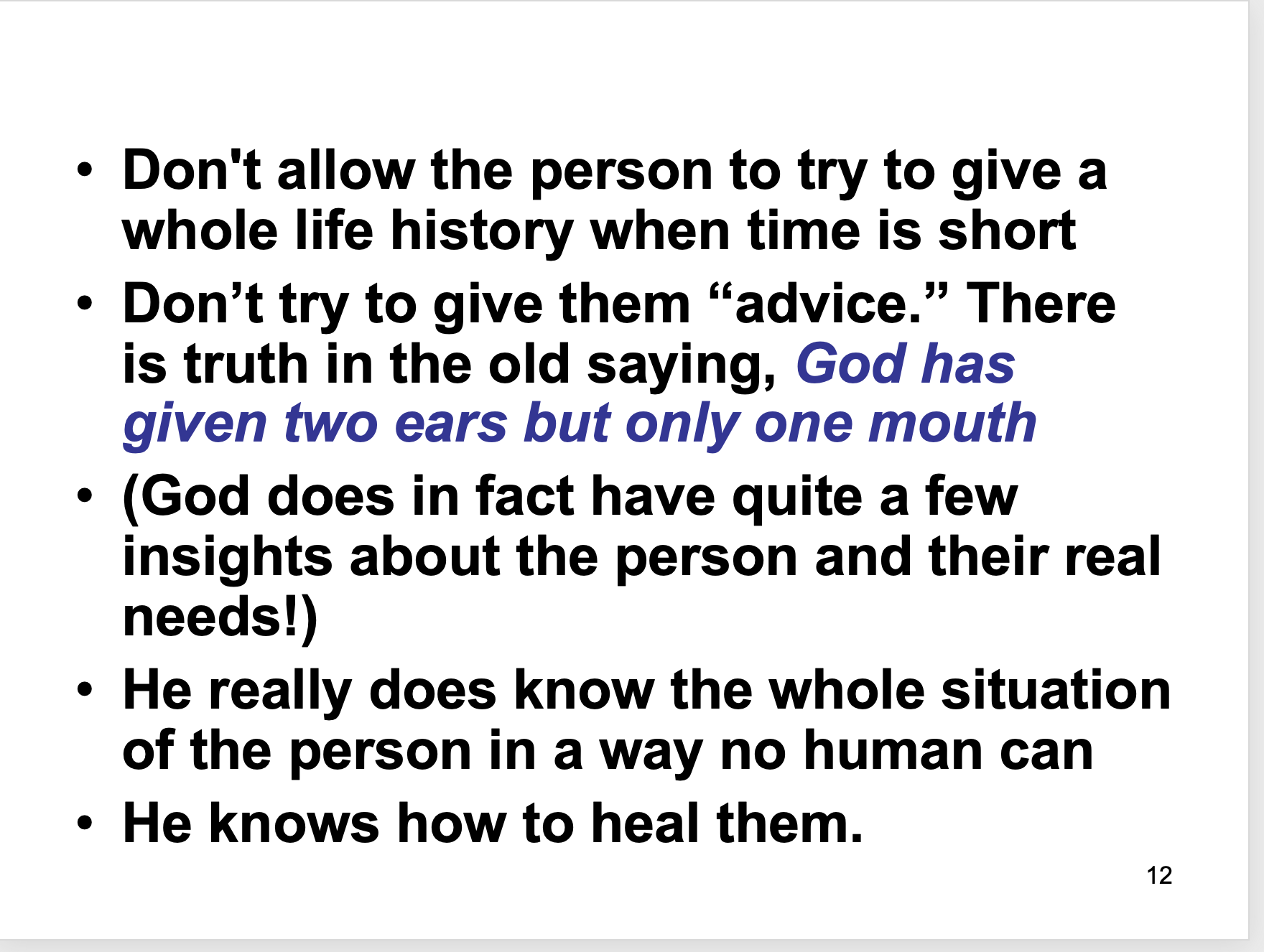
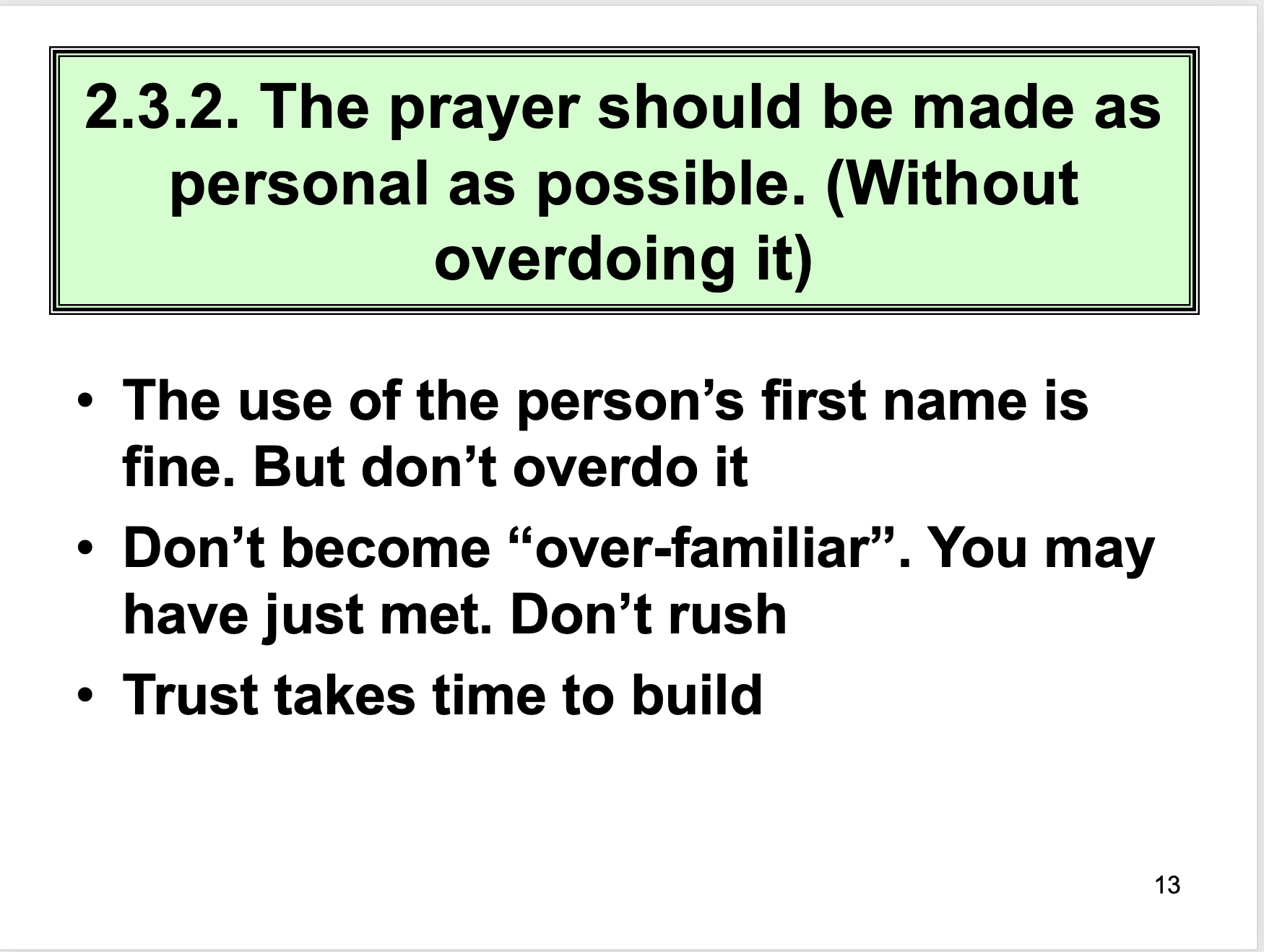
Often the person wanting prayer support may be unknown to us. We can’t as pray-ers become their best friend in a matter of minutes. But as we treat them and their concerns seriously, their trust in us can grow. It may be that eventually they say something like, “Look, the real reason I came for prayer is this.” Then they begin to share with us their deeper need.
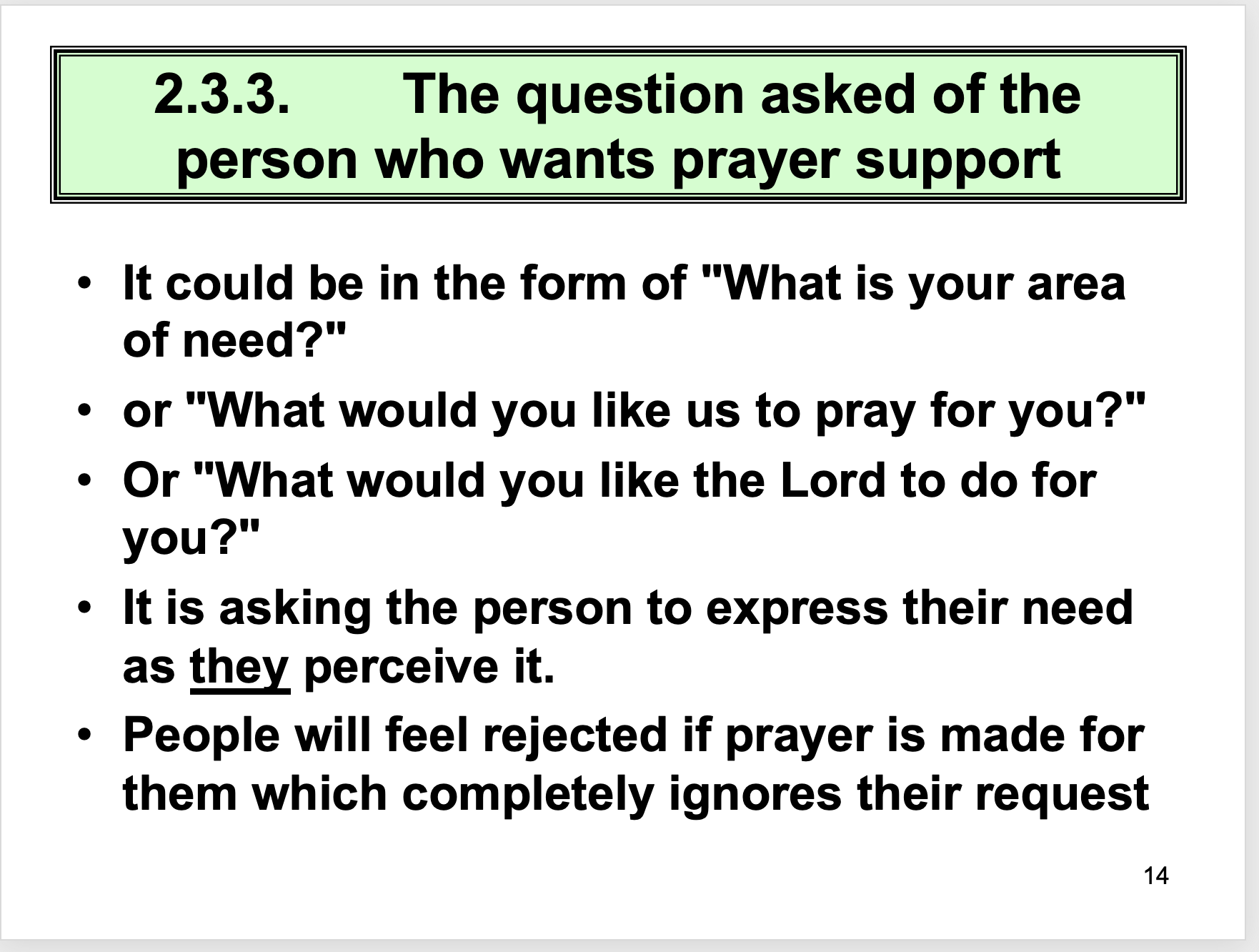
In 2.3.3 the best question to ask may be the third question, “What do you want the Lord to do for you?” It immediately reminds the pray-ers and the person wanting prayer support that it is the Lord Himself who is the healer. As James 5:15 puts it, “And the prayer offered in faith will make the sick person well; the Lord will raise them up. If they have sinned, they will be forgiven.” It is the Lord who answers believing prayer.


In 3.1we note that sometimes we notice changes in the way those coming to us for prayer speak about certain people. It may be that we notice their speech becomes quite bitter as they mention a certain person. It is not wise to say to them, ‘We noticed you became quite bitter when you mentioned that person’s name. Do you want us to pray for that bitterness to leave you?” They haven’t asked you to pray about bitterness and may feel that you are prematurely judging them. That doesn’t help when the person feels as though the pray-ers are being critical of them. Far better for the pray-ers to say at the end of the prayer time, “Is there anything else we can pray for you?” It may be that they then say, “Look, I have a real problem with bitterness. Would you pray for it to go from me?”
In 3.3 we realise that not every church congregation is familiar with audible tongues in prayer. Some ministers have inferred that tongues are not for today and may be demonic. The person who has come for prayer support may have been taught that untruth. So to pray in tongues audibly over such a person may invoke fear in them so that they want to get out of the building as soon as possible. As such it is counter-productive.




 holbeck
Spot on. Well presented. We were blessed by your words.