
Just 50 years ago on the 6th September 1975 Carlyle Carroll Tapsell went home to the Lord.
Carl Tapsell was a penalty-corner pioneer in field hockey, the first penalty-corner goal-scoring specialist in the game. ChatGPT said of him, Carlyle Tapsell’s contribution to field hockey was significant because he was part of India’s golden era of dominance in the sport, helping to cement India’s reputation as the world’s leading hockey nation in the early 20th century. Here’s a breakdown of his contributions:
🏑 As a Player
Double Olympic Champion:
1932 Los Angeles: Member of the Indian team that dominated, scoring 24–1 against the USA in one match and winning gold.
1936 Berlin: Played in the famous final where India beat Germany 8–1 before Adolf Hitler and a huge crowd.
Key Position: Played halfback, a crucial role linking defence and attack. He was known for his speed, anticipation, and strong tackling.
Versatility: He was admired for his ability to adapt and play different positions when needed, which strengthened India’s depth.
🌏 Legacy
Helped establish India as an unstoppable hockey powerhouse of the 1930s.
Part of the team that inspired generations of Indian players and contributed to hockey’s popularity in India.
Represented the Anglo-Indian community in India’s international sporting success, showcasing diversity in Indian sports at the time.
His participation in two consecutive Olympics added to India’s streak of six consecutive Olympic golds (1928–1956).

Indian hockey team members on the voyage to Los Angeles for the 1932 Olympic Games. Carl is on the left of the ship’s Captain.
Carl Tapsell in Australia
Carl, his wife Eileen and daughter Carole moved to Ipswich in Australia in 1947. He immediately had a major impact upon the field hockey scene in Australia. The following are newspaper reports on his playing skill in a competition in 1948.
South Queensland hockey. 1948
South Queensland hockey season opened yesterday at Ipswich with the Adamson Cup carnival.
Twenty-four teams are competing and the series reached the quarterfinals stage.
Ipswich produced something in class when they trotted on to the field with Carl Tapsell at the lead. Carl is an ex-Indian Olympiad. He played for India at the Los Angeles games in 1932 and again in 1936 in Berlin, when India carried off the trophy. Playing fuilback, Tapsell showed subtleties of the game that were a revelation to the spectators. Definitely, is an asset to Queensland hockey. Ipswich won their way to the quarter- finals by constructive right wing tactics, in most instances touched off by Tapsell.
Ably led by Carl Tapsell, the Ipswich team has reached the semi-finals. Considerable Interest was desired, and all visitors have taken in the first appearance in Australia of Tapsell, who represented the world’s champions (India) at the Olympic Games in 1932 and 1936. Tapsell’s experience and leadership were throughout especially with his penalty corners.
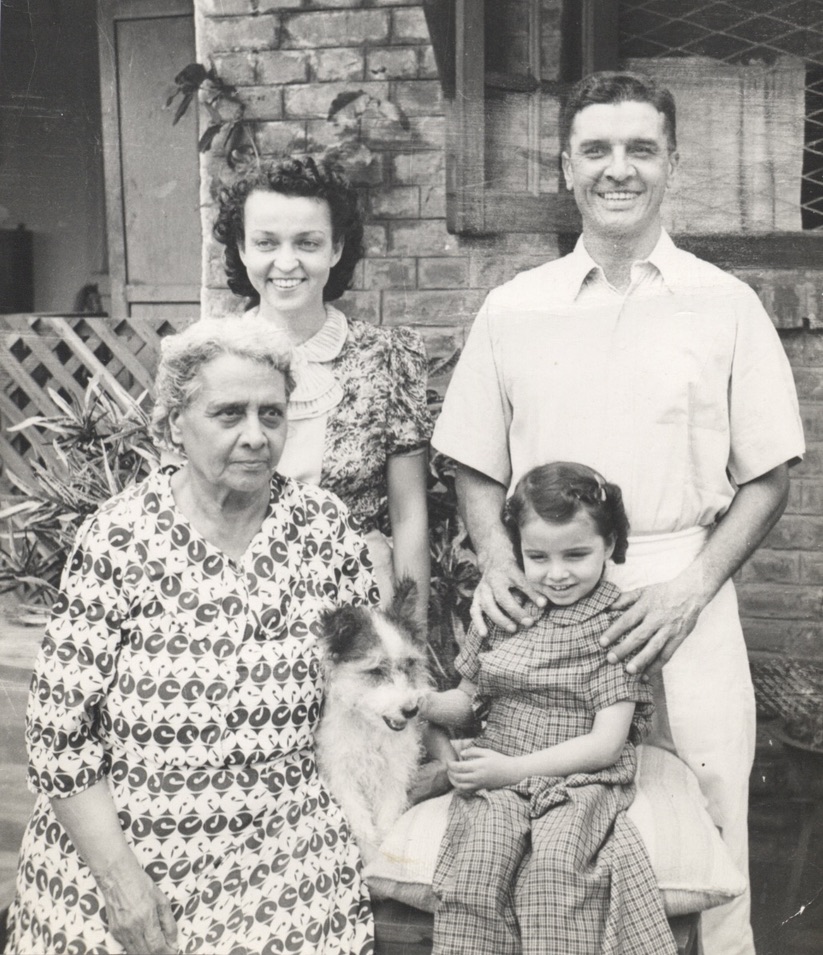
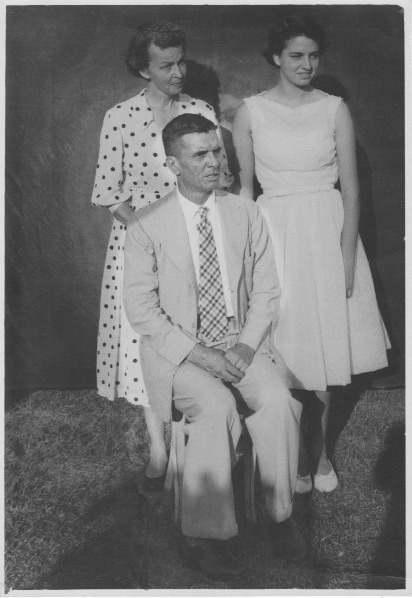
Photo 1. TheTapsells in India before moving to Australia.
Photo 2. The Tapsell family in Ipswich.
Carl’s contribution continued as he tutored young hockey players in the subtleties of the game. One of them not only represented Australia as a player but later coached the Australian and the Great Britain Olympic hockey teams.
Retirement from hockey meant taking up the game of golf. Here again he excelled and he represented the Queensland Railways golf team in national competitions. In both sports Carl was seen as a dedicated sportsman respecting the rules of the games and the officials. He was a gentleman in every aspect of life and had a very deep love for his wife and daughter. He also became besotted with his grandchildren when they arrived some years later.
My contact with Carl came when I went to their home to plan the lessons for Junior church with his wife and first met their beautiful daughter Carole. Carole later joined the Youth Group I was leading and the rest is history as they say. Their parenting was outstanding and because of that I married the nicest, most generous gracious woman ever born.
Carl was very proud of his wife’s musical talents as a pianist and organist and as a woman of deep prayer. He was also very proud of his daughter Carole who excelled as a sportswoman in athletics, netball, swimming and later hockey. Had he lived longer he would have been very proud of his grandson James who became an Australian 7 test Wallaby Rugby Union player.
Only the Lord knows the impact of his life and witness in his time on earth, but it would have been immense as a loving husband and father and as a faithful friend. Also as a sportsman. A famous coach once observed of Carl, “This player has influenced the standard of the game considerably and his presence on our playing fields has been a model for all who wish to secure the highest honour the game can offer. A gentleman both on and off the field, Carl by his demeanour has set example of conduct and playing ability that will have a lasting effect on our game.”

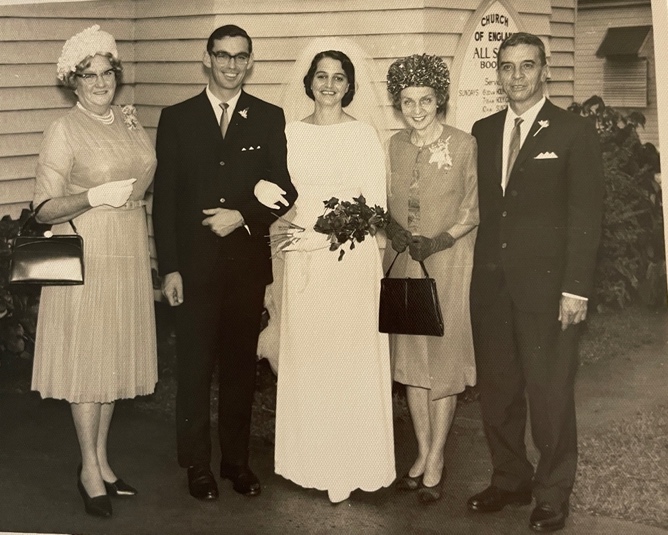
Photo3. Carl proudly escorting his daughter Carole to her wedding.
Photo4. A very happy photo of the wedding party on Carole’s big day.
Blog No.579 posted on Friday 05 September 2025
 holbeck
576. GALATIANS Chapter 1 Verse 4. Huge Salvation Truths In A Few Words.
It’s amazing how very often complex truths can be expressed simply in a few words. One great example of this is in St Paul’s letter to the Galatians. In one verse in particular, he concisely summarises the reason Jesus humbled Himself to come to earth. It is in chapter 1 verse 4, “who gave Himself for our sins to deliver us from the present evil age, according to the will of our God and Father.”
We notice first of all that in the previous verse Jesus is described as, “the Lord Jesus Christ.” The term “Lord Jesus Christ” is used in 61 verses in the New Testament. It reminds us that Jesus was the Christos, the Anointed One, the Messiah whose coming into the world had been prophesied centuries before. But He was also recognised as the kurios, the Lord, a title used of God Himself. Some have asked when did Jesus become “The Lord?” Some shepherds were the first to be told that a new born baby was a Saviour, the Messiah and the Lord, “Today in the town of David a Savior has been born to you; he is the Messiah, the Lord.” Luke 2:11. It was a title the apostle Thomas declared when He met the risen Jesus, “Thomas said to him, “My Lord and my God!’” John 20:28. Certainly after His resurrection, the disciples had no qualms about recognising Jesus as the Lord, and as the eternal Son of God.
What did Paul write about Jesus in verse 4?
A]. “Who Gave Himself For Our Sins.”
He gave Himself, where “gave” is from didōmi, to give, deliver (up). In the most well-known verse in the Bible the apostle John wrote, “For God so loved the world, that he gave his only Son, that whoever believes in him should not perish but have eternal life.” John 3:16. “Gave” here is the same word didōmi. This verse answers some critics who suggest that God cannot be a God of love if He was willing to give His Son up to death. But Jesus gave Himself to die for the sins of humans. It’s as though in the eternal counsels of God that He and Jesus His Son agreed on the mode of salvation. Their plan was that Jesus would give Himself to die for the sins of the world.
B]. “For Our Sins.”
There are many words for “sin” in the New Testament and the one used here is hamartia. It means a falling short, missing the mark or doing the wrong thing. It is universal among humans as St Paul wrote in Romans using the verb form of the word, “for all have sinned and fall short of the glory of God.” Rom 3:23.
Perhaps there has always been the belief that sin must be punished. The Jews in New Testament times would have been familiar with this verse in Ezekiel, “The one who sins is the one who will die.” Exodus 18:20. Or as St Paul would later write, “For the wages of sin is death, but the gift of God is eternal life in Christ Jesus our Lord.” Romans 6:23.
Forgiveness for human sin could not be earned or deserved. It could only come from the grace of God to those who put their trust in Jesus. As St Paul wrote, “In him we have redemption through his blood, the forgiveness of sins, in accordance with the riches of God’s grace.” Eph 1:7.
C]. “To Deliver Us”
“Deliver” is from exaireō, meaning to tear out, to select; to release, deliver, pluck out, rescue. Jesus’ death on the cross delivered or rescued guilty sinners from spiritual death if they trusted in Him. They are rescued from the power of the present evil age while still living in it.
D]. “From The Present Evil Age.”
“Age” here is from aiōn meaning a significant period of time, the present nature of the world in its thinking and behaviour. It’s as though humans are trapped in the world’s system with its inability to produce godly living. But Jesus came to set the captives free, to become new creatures as St Paul wrote in 2 Cor 5:17 “Therefore, if anyone is in Christ, he is a new creation. The old has passed away; behold, the new has come.” The word for “new” here is kainos rather than neos. Neos means a brushed up version of the old or recent. However kainos means something radically new, a life with new and deeper dimensions.
The Holy Spirit indwells all believers in Christ and imparts the wisdom of God to those open to receive it. So they are able to know the guidance of the Holy Spirit and to become aware of false teaching and false behaviour. The Holy Spirit also imparts the life of Christ into every believer and sets them free from the limitations of their old unregenerate lives.
E]. “According To The Will Of Our God And Father.”
The death of Christ was not an unfortunate event. His death had been planned eternally and was in accord with the will of God. It meant too that believers could know a new dimension of living, by walking according to the dictates of the Spirit rather than walking according to the dictates of their lower nature, the flesh.
So in this one verse we have so much theological truth. And it all stems from the grace of God. His grace is seen in the death of Christ so that those who believe in Him receive both forgiveness of their sins and also the gift of eternal life. His grace continues throughout the believer’s experience in enabling them to become the person God wants them to be. They are to work out their salvation with fear and trembling, “for it is God who works in you, both to will and to work for his good pleasure.” Phil 2:13. His ongoing grace is seen in working out in their lives what He is inwardly working within them, giving them both the willingness and the ability to please Him. “Amazing Grace, how sweet the sound!”
Blog No. 576 posted on Tuesday 27 May 2025.